Welcome to Samreex

Tactical Belts: What You Need to Know Before Buying
If you’ve ever found yourself searching for a belt that can handle the weight of gear, tools, or a firearm without sagging, twisting, or failing, you’ve likely come across the term “tactical belt.” But what exactly makes a belt “tactical”? And more importantly, how do you choose the right one for your needs?
In this comprehensive guide, we’ll break down everything you need to know about tactical belts—from what sets them apart to how to choose the right model for your activities. And if you’re looking for a reliable manufacturing partner, Shenzhen Zhongke Shangyu Company Limited is here to deliver quality tactical gear that professionals trust.
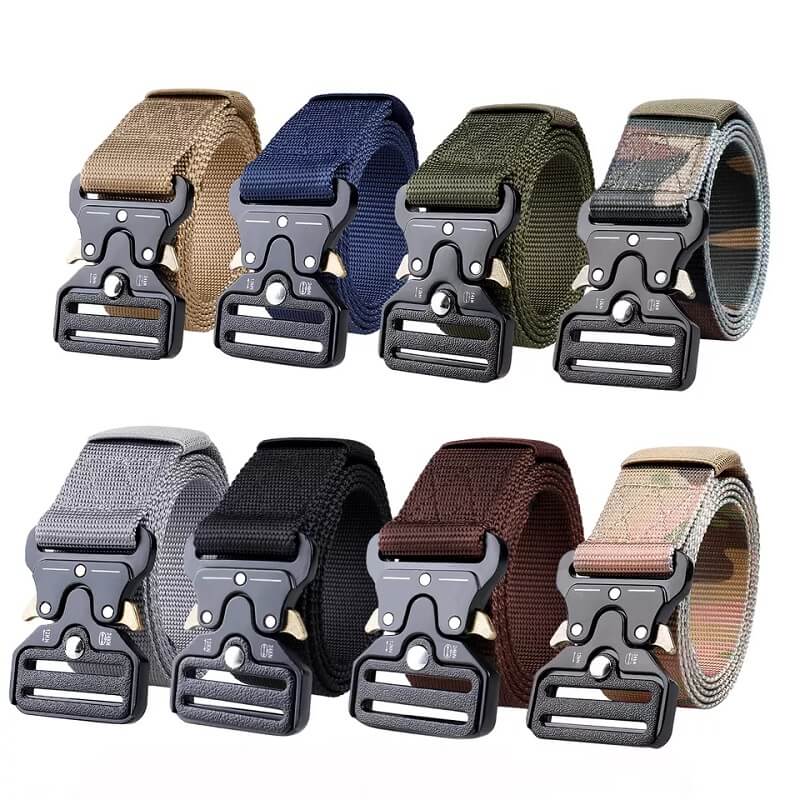
What Is a Tactical Belt?
A tactical belt is a purpose-built piece of equipment designed to carry weight—whether that’s a holster and firearm, magazine pouches, medical kits, or everyday carry (EDC) tools—while maintaining rigidity and stability. Unlike a standard dress belt that you might buy at a department store, a tactical belt is engineered to prevent sagging, twisting, and stretching when loaded with gear.
Tactical belts have been used for decades by military personnel, law enforcement officers, and outdoor professionals. In recent years, they’ve also become increasingly popular among civilians who carry concealed, train at the range, or simply appreciate gear that works as hard as they do.
Think of a tactical belt as the foundation of your load-bearing system. It doesn’t matter how good your holster or pouches are—if your belt can’t support them, your entire setup will fail when you need it most. As the saying goes in firearms circles: carrying is 50% belt, 40% holster, and 10% gun.
Tactical Belt vs. Duty Belt vs. EDC Belt: What’s the Difference?
This is one of the most frequently asked questions—and for good reason. The terminology can be confusing, but understanding the distinctions will help you make the right choice.
Duty Belts are typically part of a uniform for law enforcement, corrections officers, and security personnel. They are rigid by design to distribute the weight of heavy gear evenly and prevent sagging during physical activity. Duty belts are designed to hold a standard loadout—handcuffs, baton, radio, flashlight, firearm, and extra magazines—and they sit outside your clothing as a visible part of your uniform. They are typically wider and heavier, usually 2 inches or 2.25 inches.
Tactical Belts are all about flexibility and function in the field. They are used by a wide range of professionals—search and rescue workers, paramedics, hunters, outdoor adventurers, and tactical trainers. Tactical belts are usually more flexible than duty belts and are designed to adapt to a variety of situations. Some feature MOLLE (Modular Lightweight Load-carrying Equipment) webbing for attaching pouches and gear.
EDC Belts are optimized for daily use, balancing lightweight comfort with enough stiffness to support concealed carry holsters. They are slimmer and more discreet than duty or tactical belts, making them ideal for urban commuting and everyday wear.
What Makes a Tactical Belt Different from a Regular Belt?
A regular belt is designed to hold up your pants. A tactical belt is designed to hold up your pants and your gear. The differences are significant:
Stiffness and Rigidity: A quality tactical belt must be rigid enough to support the weight of attached gear without sagging or twisting. Even a small firearm can weigh close to two pounds when loaded—more than enough to weigh down an average belt. Tactical belts achieve this stiffness through thick nylon webbing, internal stiffening inserts (like Kydex, polymer, or even steel), or multi-layer construction.
Material: Most tactical belts are made from high-denier nylon (800D to 1000D Cordura) or military-grade nylon webbing. Nylon is lightweight, highly abrasion-resistant, moisture-resistant, and easier to clean than leather. Some tactical belts are made from full-grain leather for a more discreet appearance, but they typically include internal stiffening layers.
Width: Professional-grade tactical belts are typically at least 1.5 inches wide, with duty belts often reaching 2 inches or more. The wider the belt, the better it distributes weight across your hips and reduces pressure points.
Buckle Systems: Tactical belts feature specialized buckles designed for quick release, security, and load-bearing capacity. The most common options include Cobra buckles (known for their strength and fast release), ratchet buckles (offering micro-adjustments), and traditional prong buckles.
Key Components of a Quality Tactical Belt
When shopping for a tactical belt, here’s what you should look for:
1. The Belt Body
The body of the belt is typically made from heavy-duty nylon webbing. Look for military-grade materials like 1000D Cordura nylon, which offers exceptional tear and abrasion resistance. Some high-end belts feature double-layer construction or internal stiffening inserts (like Kydex, Tegris, or HIPS hard plastic) to maintain rigidity under load.
2. The Buckle
The buckle is the heart of any tactical belt. Cobra buckles (originally manufactured by AustriAlpin) are the industry standard for high-load applications. They feature a mechanical locking mechanism that won’t open under load and can be operated with one hand, even with gloves on. Cobra buckles are available in aluminum, steel, and polymer versions.
Ratchet buckles use a track-and-pawl system that allows for micro-adjustments in 1/4-inch increments. They’re popular for EDC belts because they offer a precise fit, though some users question their long-term durability.
3. MOLLE Compatibility
Many tactical belts feature MOLLE webbing—a grid of nylon straps that allows you to attach pouches, holsters, and other gear. This modular system lets you customize your belt setup based on your specific needs, whether that’s carrying extra magazines, a medical kit, or a flashlight.
4. Stitching and Reinforcements
Look for reinforced stitching at stress points, bartacked seams, and quality hardware like YKK zippers or Duraflex buckles. These details determine how long your belt will last under real-world use.
Frequently Asked Questions About Tactical Belts
Do tactical belts go through belt loops?
It depends on the design. One-piece tactical belts are worn through standard pant belt loops. Double-belt systems (inner/outer) feature an inner belt that goes through the loops and an outer belt that attaches via hook-and-loop fastening. Padded battle belts are typically worn over clothing and don’t go through belt loops at all.
How do I choose the right size?
Never assume your pant size is your belt size. Tactical belts are structured differently from regular belts. The general recommendation is to order one size up from your standard pant size to accommodate holsters or additional layers. However, the most reliable method is to measure your waist at the belt line while wearing the pants you’ll use, then check the manufacturer’s size chart. Be aware that heavy-duty buckles can consume 5–8 cm of usable length.
Can I wear a tactical belt every day?
Yes. Many people wear tactical belts as their everyday belt—especially EDC-style models that are slim enough to fit through standard belt loops while still providing the stiffness needed for concealed carry.
Are tactical belts comfortable?
A properly fitted tactical belt should be comfortable even during extended wear. The key is choosing the right width and stiffness for your needs. A belt that’s too stiff for light use can dig into your hips, while a belt that’s too flexible won’t support heavy gear. Wear the belt on your hips (iliac crest), not your natural waist—your hips provide a stable platform to support the weight of your gear.
What’s the difference between 1.5-inch and 2-inch belts?
1.5-inch belts fit through most standard belt loops and are ideal for EDC and concealed carry. 2-inch or 2.25-inch belts are typically used for duty purposes, offering more surface area to distribute the weight of heavy gear.
Can I use a tactical belt for concealed carry?
Absolutely. Many tactical belts are specifically designed for concealed carry, featuring enough stiffness to support an inside-the-waistband (IWB) or outside-the-waistband (OWB) holster without sagging. Look for belts with a rigid internal insert or reinforced nylon webbing.
How do I clean my tactical belt?
Never machine wash your tactical belt. Use a soft brush and mild soap with water to spot clean any dirt or debris. Allow the belt to air-dry completely, away from direct heat, to maintain the integrity of the nylon and stitching.
How to Choose the Right Tactical Belt
With so many options on the market, choosing the right tactical belt can feel overwhelming. Here’s a simple framework to guide your decision:
1. Identify Your Primary Use: Are you carrying a firearm for concealed carry? Are you a law enforcement officer needing a duty belt? Are you a range shooter who needs a modular battle belt? Your use case will determine the type of belt you need.
2. Consider Your Load: How much weight will you be carrying? A simple EDC setup with a single firearm and one magazine requires less stiffness than a full duty loadout with multiple pouches and tools.
3. Evaluate Your Environment: Will you be in wet or muddy conditions? Nylon belts are weather-resistant and easy to clean. Do you need to maintain a low profile? Leather or slim nylon EDC belts offer better concealment.
4. Check the Hardware: Look for quality buckles (Cobra is the gold standard), reinforced stitching, and durable materials. These details determine how long your belt will last.
5. Get the Right Fit: Measure carefully and don’t assume your pant size is your belt size. If you’re between sizes, size up—you can always tighten a belt, but you can’t make it longer.
Tactical belts have evolved from simple gear carriers into sophisticated load-bearing systems that professionals and enthusiasts rely on every day. Understanding the differences between belt types, materials, and buckle systems is the first step toward making an informed decision. The key is choosing a belt that matches your specific needs—whether that’s daily concealed carry, range training, or duty use.
From high-denier nylon webbing and reinforced stitching to Cobra buckles and MOLLE compatibility, the best tactical belts are built to last. And when you choose a manufacturer like Shenzhen Zhongke Shangyu Company Limited, you’re choosing quality that you can rely on, shift after shift, mission after mission.
Ready to upgrade your gear? Explore what Shenzhen Zhongke Shangyu has to offer—and experience the difference that true tactical craftsmanship makes.